The Dutch first aid handbook has been revised.
And the works council now has a say.
Last week a planner at a logistics company called. That morning their works council had asked whether the BHV courses (BHV is the Dutch in-house emergency response training) were “still being taught to the latest guidelines”. She didn't know the answer and didn't know who did. It's an awkward conversation to have, and I think a lot of training providers will be having it more often this year.
In 2026 there are two changes that affect the entire training sector. One is about what you teach, the other about who is watching. Here is what has actually changed and what it means for your course calendar in practice.
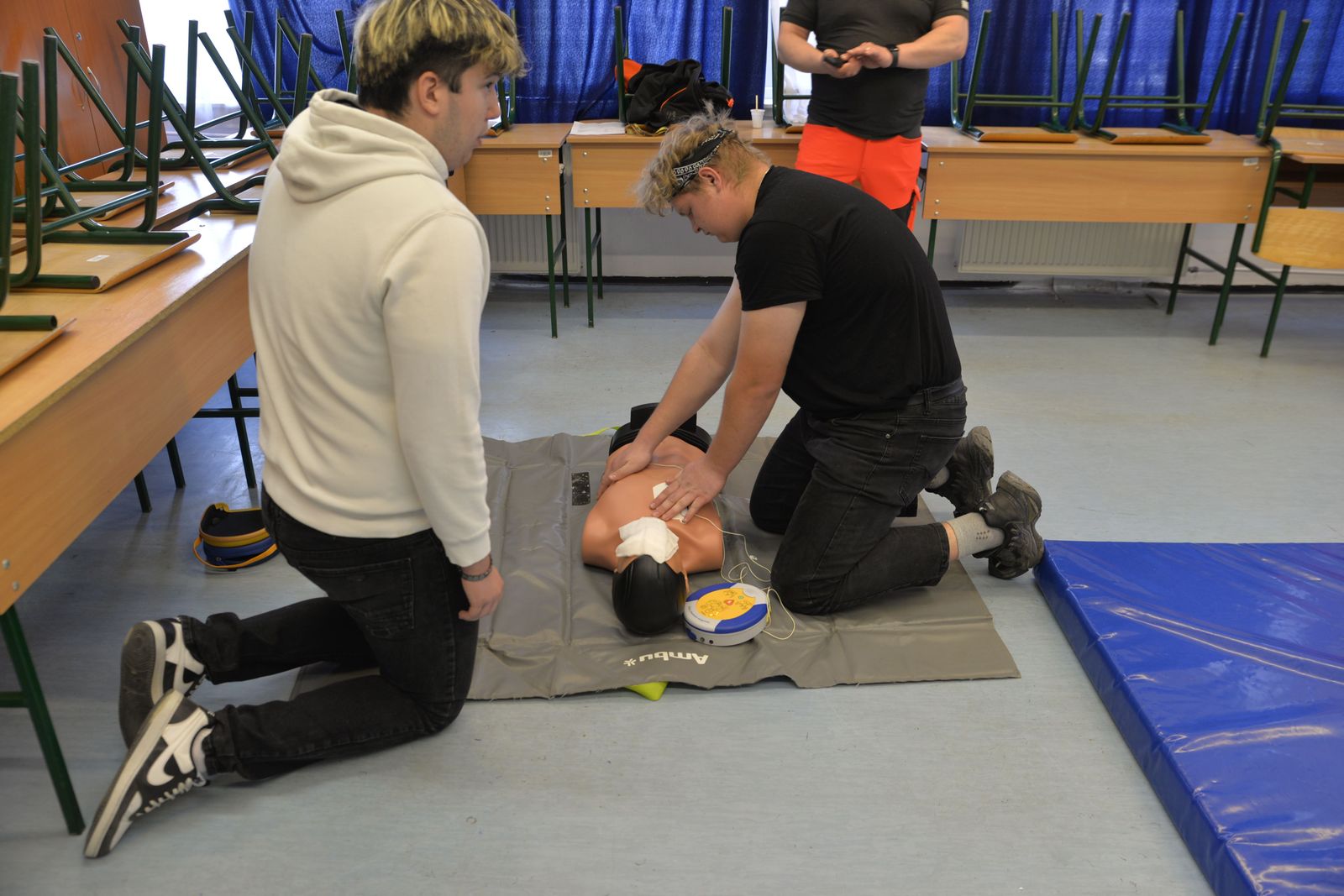
What changes in the NREH 2026
On 10 March 2026 the revised Dutch First Aid Guidelines (Nederlandse Richtlijnen Eerste Hulp, NREH) were published by Het Oranje Kruis, NIBHV, the Red Cross and the Dutch Resuscitation Council. They are the standard every first aid (EHBO) and BHV course is measured against. The guidelines are revised every five years and the previous edition dated from 2021, so an update was due.
The changes to the content are not dramatic. The biggest adjustments are in the resuscitation protocols for children, the guidelines on drowning and cold injuries, and a more extensive chapter on psychological first aid. What is dramatic: a decent migration guide from NIBHV or the Red Cross is still missing. So many training providers are sitting there themselves, laying their lesson plan next to four different sources.
In practice: your instructors need to be brought up to date on the changed parts within roughly six months. Het Oranje Kruis and NIBHV have announced they will revise their instructor exam in the third quarter. After that you have about a year before it is expected on the shop floor.
What changed in the Arbowet
As of 28 January 2026 the Arbowet (the Dutch Working Conditions Act) was amended through the Verzamelwet SZW 2026, an omnibus act. On 1 July a second amendment follows, mainly to article 12, which governs cooperation between employer and employees. The word “cooperate” is replaced by “consult”, and the Dutch Labour Inspectorate will be able to enforce it.
What it comes down to: employers have to actively discuss their health and safety policy with the works council (OR), the staff representation (PVT), or, if neither exists, with the employees concerned. Not “inform for their information”. Actively discuss. And employees have the right to make proposals that the employer has to respond to on their merits.
For BHV staffing this has two consequences. The number and distribution of emergency response officers becomes a matter for consultation instead of a one-sided employer decision. And if the works council asks whether the training still meets the current guidelines, a serious answer has to follow. Not “we found a provider in 2019”.
Clients will ask questions they didn't ask in 2024. Which edition of the NREH? Which certifying body? When was your instructor last recertified? Who updated the risk inventory (RI&E) this year? It's not an attack, but it takes a minute longer to answer than it did until now.
What this means for your course calendar
Two things get busier.
The first peak is probably in the autumn. Works councils that were prompted in January to have their say will by then have had six months to go through their staffing and spot shortages. Expect extra in-company requests for BHV Basic between September and November. Not for refreshers, but for newly trained emergency response officers.
The second peak is technical: existing emergency response officers want to know whether their refresher still counts under the NREH 2026. The answer is yes, provided the course was given after August 2026 and the instructor has been brought up to date. That is a communication job, not a course-content job.
And then there is the question you can do something with commercially: who is delivering a course right now that explicitly puts “NREH 2026” on the certificate? In May that is still almost nobody. In October it is the norm. That leaves three months in which you can get ahead of your market, if you want to.
Three things to arrange this quarter
Concrete, no abstract recommendations:
- Plan a day in June or July on which your instructors go through the NREH 2026 together. Half a day is not enough. A full day, with the changes laid next to your own lesson plan.
- Update your course description on the website with “taught according to NREH 2026” as soon as your instructors are recertified. For findability and for the next quote conversation. Both count.
- Call five existing business clients this month and ask how their works council has picked it up. Some are on top of it, some don't even know the law has changed. That second group is where the work is.
The legal changes are not revolutionary. But over the next two quarters they will produce more conversations about your course content than you are used to. Whoever puts a working day into it now won't have to improvise in October.
Keep an eye on your refreshers
Trainiq automatically reminds your participants 90 days before their certificate expires and shows you per month which courses are filling up. No more Excel, no surprises in September.
Request a demo See BHV administration →